
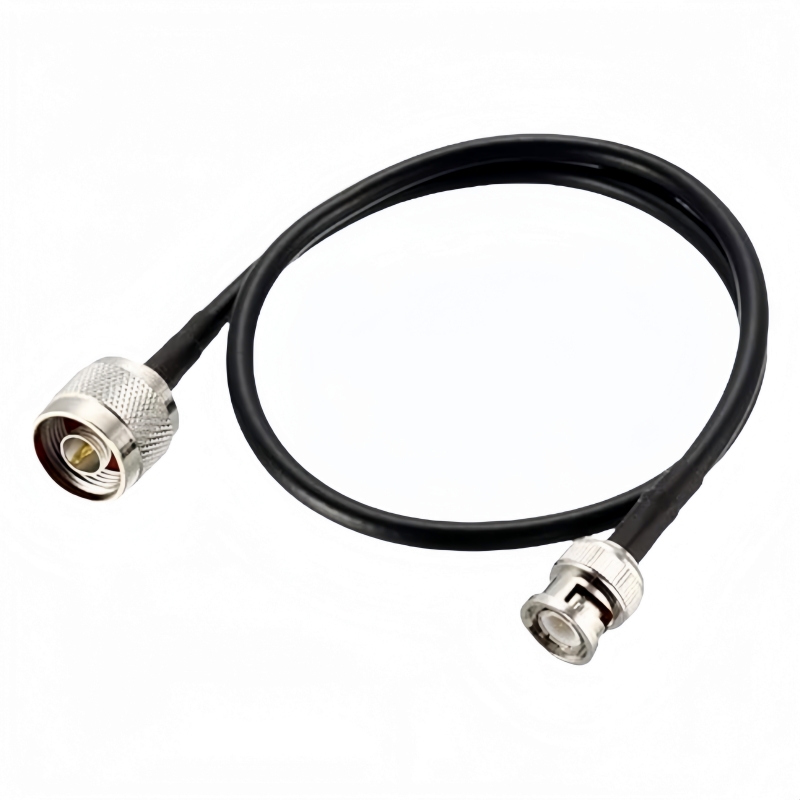
Upgrade your high-frequency RF setups with our RG58U Coax Cable. BNC Male to TNC Male connectors for optimal signal integrity. Ideal for radios, antennas, and communication. Order now!
RG58U Coax Cable | BNC Male to TNC Male RF Coaxial Adapter for High-Frequency Applications
Next-Gen RF Connectivity for Professional Systems
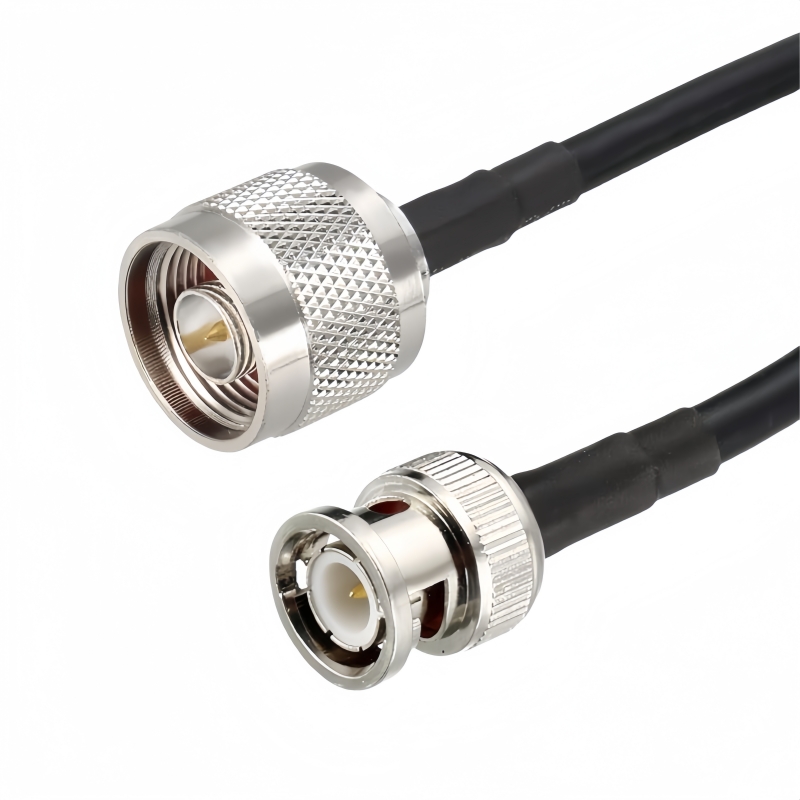
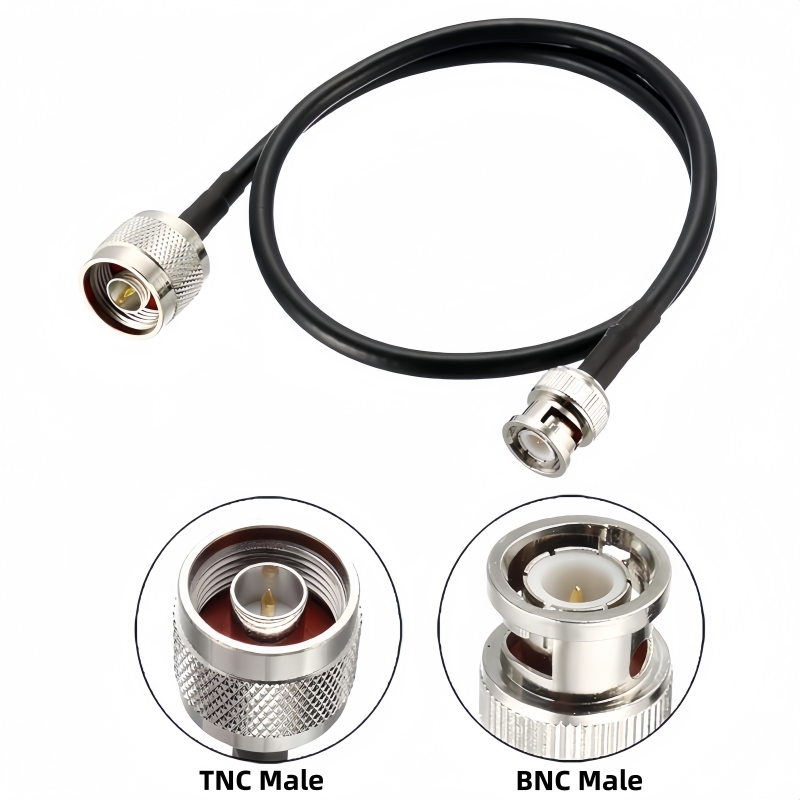
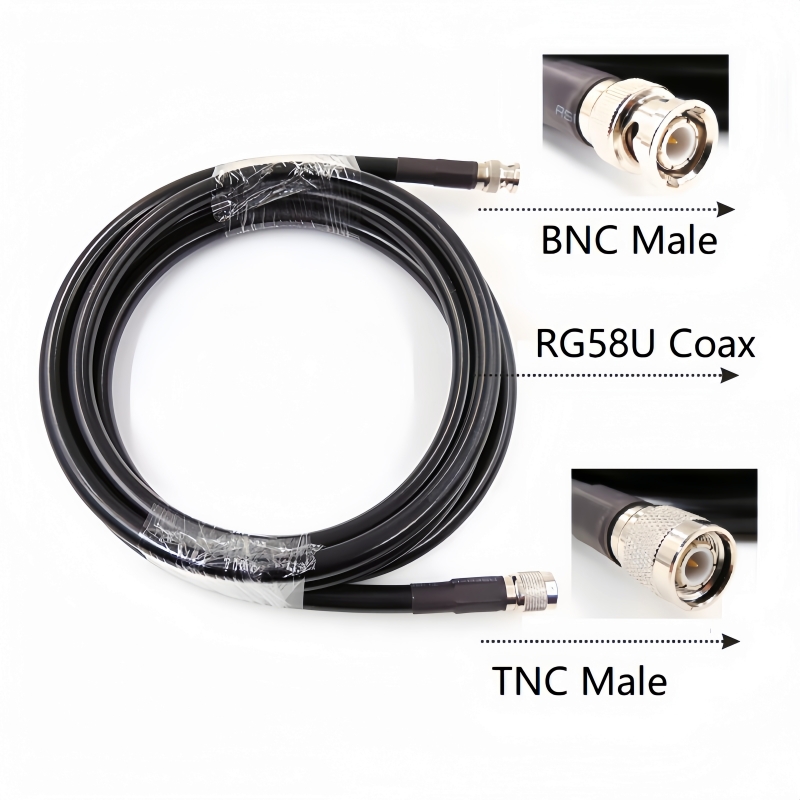
The PINOWELL RG58U Coax Cable bridges BNC and TNC interfaces with precision-engineered design, delivering superior signal integrity and durability for high-frequency applications. Ideal for radio systems, test equipment, and surveillance networks, this cable ensures reliable performance across 0–4 GHz bandwidths.
Core Features
- Dual-Connector Architecture:
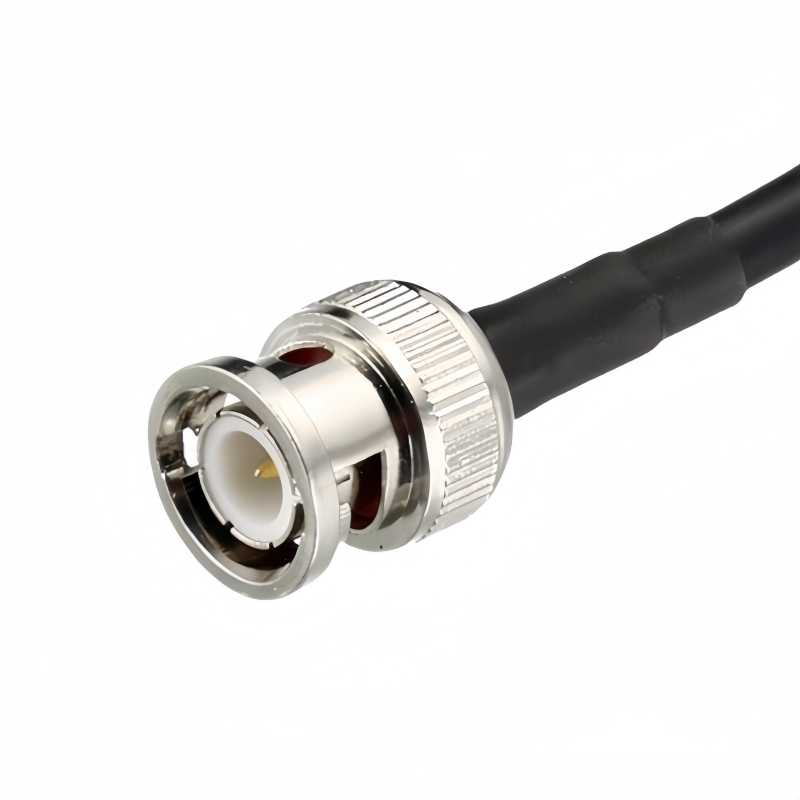
- BNC Male: Bayonet-lock design for quick, secure connections in mobile or industrial setups.
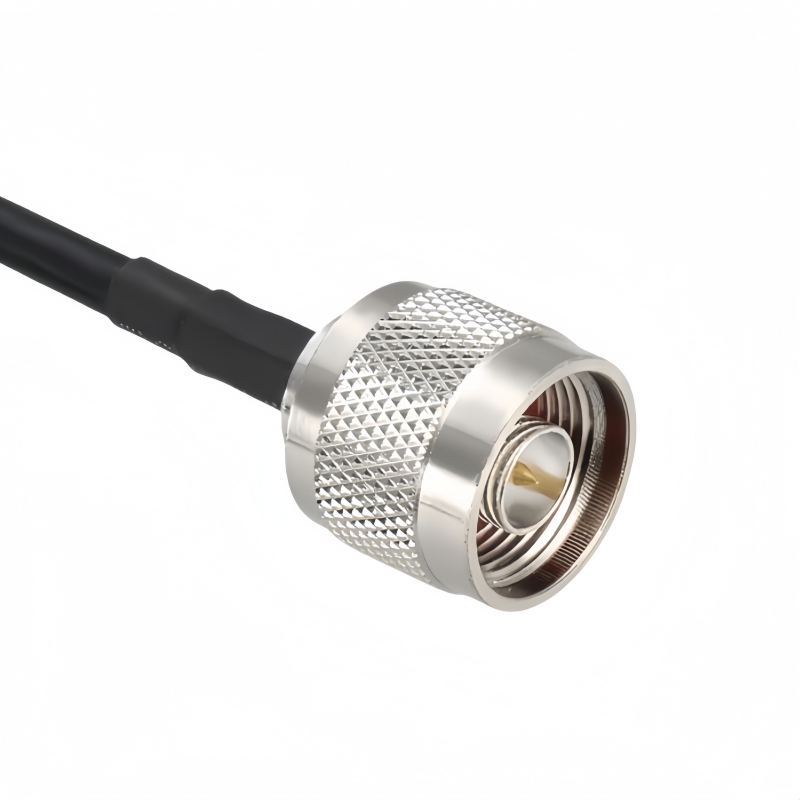
- TNC Male: Threaded coupling provides vibration-resistant stability in fixed installations.
- 50Ω Impedance: Matches standard RF equipment for optimal signal transfer.
- Premium Cable Properties:
- RG58/U Construction: Flexible, lightweight coax for short-to-medium range transmissions (1–50 ft).
- Stranded Copper Conductor: Balances conductivity and flexibility for repeated bending.
- 45% Braided Shield: Reduces EMI/RFI interference for noise-free operation.
- High-Frequency Performance:
- 0–4 GHz Bandwidth: Supports VHF/UHF, Wi-Fi, and low-loss RF applications.
- 500V RMS Rating: Handles high-power signals in professional radio systems.
- Corrosion-Resistant Design:
- Nickel/gold-plated contacts resist oxidation for long-term reliability.
- Black PVC jacket withstands extreme temperatures (-40°C to +85°C).
Technical Specifications
| Specification | Details |
|---|---|
| Interface | BNC Male ➔ TNC Male |
| Impedance | 50Ω ±2% |
| Frequency Range | 0–4 GHz |
| Voltage Rating | 500V RMS |
| Cable Type | RG58/U, 28 AWG |
| Shielding | 45% Braided Copper + Aluminum Foil |
| Certifications | CE, FCC, RoHS |
Applications
- Radio & Antenna Systems:
- Connect transceivers, diplexers, and repeaters in amateur radio, CB, or marine setups.
- Test & Measurement:
- Spectrum analyzers, signal generators, and oscilloscopes in R&D labs.
- Surveillance & Networking:
- CCTV cameras, Wi-Fi extenders, and RF signal distribution in smart buildings.
- Aviation & Aerospace:
- Aircraft communication systems and ground radar installations.
Why Choose PINOWELL?
- Signal Integrity: Engineered for minimal signal loss (<1 dB at 1 GHz).
- Durability: 10,000+ bend cycles tested with UV-resistant jacket.
- Customization: Tailor cable lengths (1–50 ft) and connector finishes (gold/nickel).
Upgrade Your RF Infrastructure
The PINOWELL RG58U Coax Cable ensures seamless integration of BNC and TNC devices, delivering precision and reliability in mission-critical environments.
The PINOWELL RG58U Coax Cable ensures seamless integration of BNC and TNC devices, delivering precision and reliability in mission-critical environments.
How to Use the RG58U Coax Cable | BNC Male to TNC Male RF Coaxial Adapter?
Step 1: Hardware Connection
-
Connector Identification:
- BNC Male: Bayonet-lock connector (used in radios, test equipment).
- TNC Male: Threaded connector (common in antennas, fixed installations).
-
Physical Installation:
- BNC End: Push the BNC male connector onto the female BNC port until it clicks. Rotate clockwise to secure.
- TNC End: Align the TNC male threads with the female TNC port. Rotate clockwise until snug (do not overtighten).
Step 2: Verify Compatibility
- Impedance Check:
- Ensure both devices use 50Ω impedance (standard for RF equipment).
- Frequency Range:
- Confirm the cable’s 0–4 GHz bandwidth matches your application (e.g., VHF/UHF, Wi-Fi, CB radio).
Step 3: Test Signal Transmission
-
Basic Functionality Test:
- Connect devices (e.g., transceiver to antenna).
- Power on and check for signal strength (e.g., RSSI indicators).
-
Advanced Testing:
- Use a spectrum analyzer to measure signal loss (<1 dB at 1 GHz is ideal).
- Test with a network analyzer to verify S-parameters (e.g., insertion loss, VSWR).
Step 4: Troubleshooting
- No Signal:
- Re-seat connectors and check for debris in ports.
- Test with a different cable or port.
- Weak Signal:
- Ensure the cable length is within recommended limits (e.g., <50 ft for 4 GHz).
- Use a signal amplifier if long-distance runs are required.
- Interference:
- Route the cable away from power lines or EMI sources (e.g., motors, fluorescent lights).
- Replace with a higher-shielding cable (e.g., RG58C/U with 95% braid).
Step 5: Safety & Maintenance
- Power Off: Disconnect devices before modifying connections.
- Temperature Range: Operate within -40°C to +85°C to prevent jacket degradation.
- Connector Care: Clean contacts with isopropyl alcohol if oxidation occurs.
Key Features in Action
| Feature | Function |
|---|---|
| BNC/TNC Connectors | Secure bayonet/threaded connections |
| 50Ω Impedance | Matches standard RF equipment |
| 45% Braided Shield | Reduces EMI/RFI interference |
Applications in Practice
- Amateur Radio: Connect a transceiver to a dipole antenna.
- Test Labs: Link a signal generator to an oscilloscope.
- Surveillance: Extend CCTV camera signal to a DVR.
Related Keywords#RG58U Coax Cable, BNC to TNC Adapter, 50 Ohms Impedance, 4 GHz Bandwidth, EMI/RFI Shielding, Corrosion-Resistant Contacts, Custom Lengths, Radio/Antenna Systems, Test Equipment, Surveillance Networking, CE/FCC/RoHS Certified, High-Frequency RF, Aviation Applications, VHF/UHF Compatibility,BNC to TNC Setup, RG58U Coax Cable Guide, 50 Ohms Impedance, 4 GHz Bandwidth, EMI Shielding, RF Signal Testing, BNC/TNC Connector Care, Amateur Radio Connectivity, Test Equipment Setup, Surveillance Networking, CE/FCC/RoHS Certified, High-Frequency RF Applications