10Gbps CAT7 Ethernet Patch Cables
Feb 19,2025 | PINOWELL
What is Cat7?
Cat7 cable is a shielded twisted pair cable primarily designed to support Ethernet communications up to 10 Gbps and is backwards compatible with Cat6, Cat5 and Cat5e cable categories.Cat7 cables are designed to adapt to the application and development of 10 Gigabit Ethernet technology and provide higher data transmission rates and stronger anti-interference capabilities.
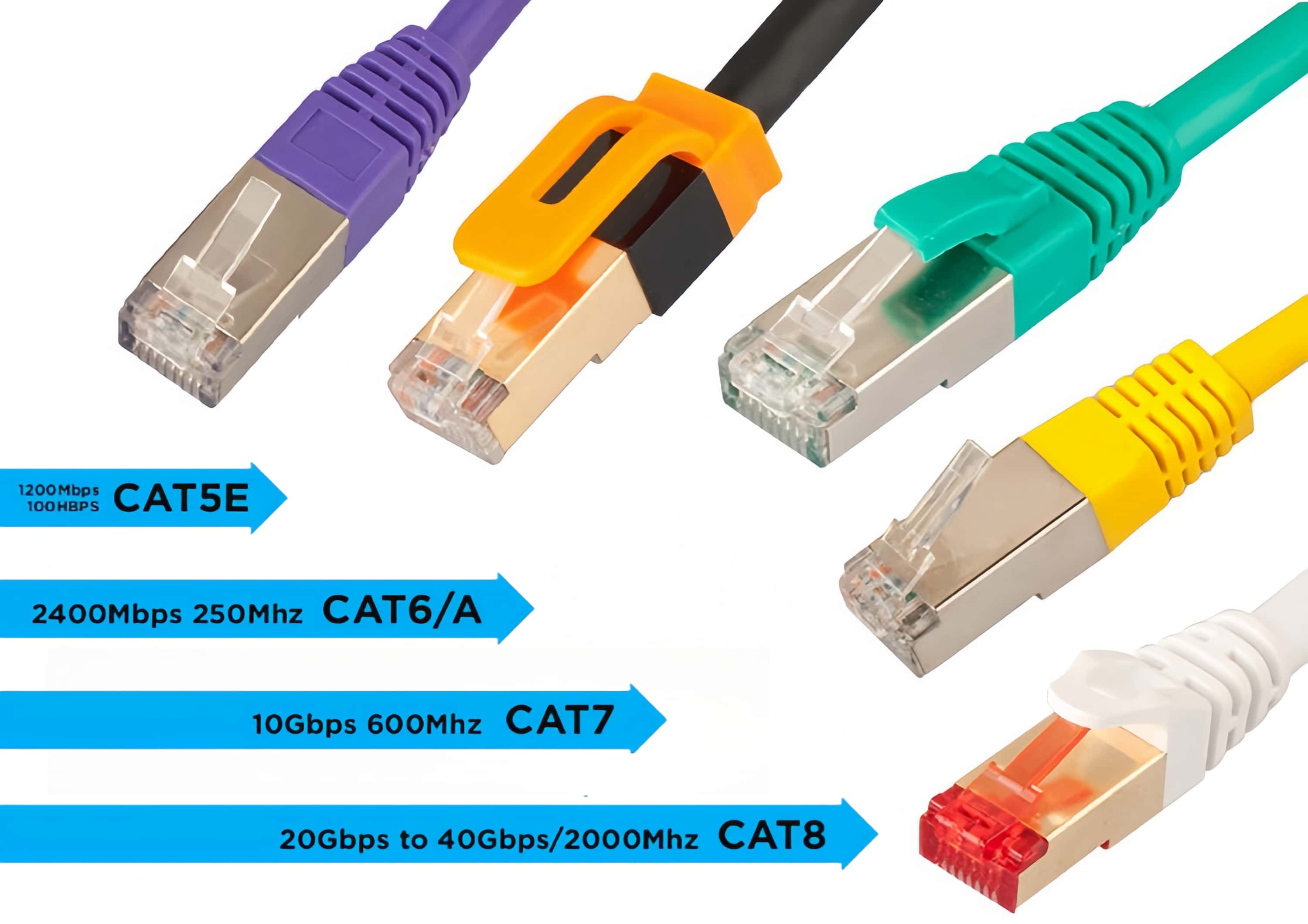
What is the difference between Cat5, Cat6,Cat6a, Cat7, and Cat 8?
Essentially, each version is more robust, better shielded, and capable of faster data transmission than its predecessor. For detailed information about each spec, see the table below.
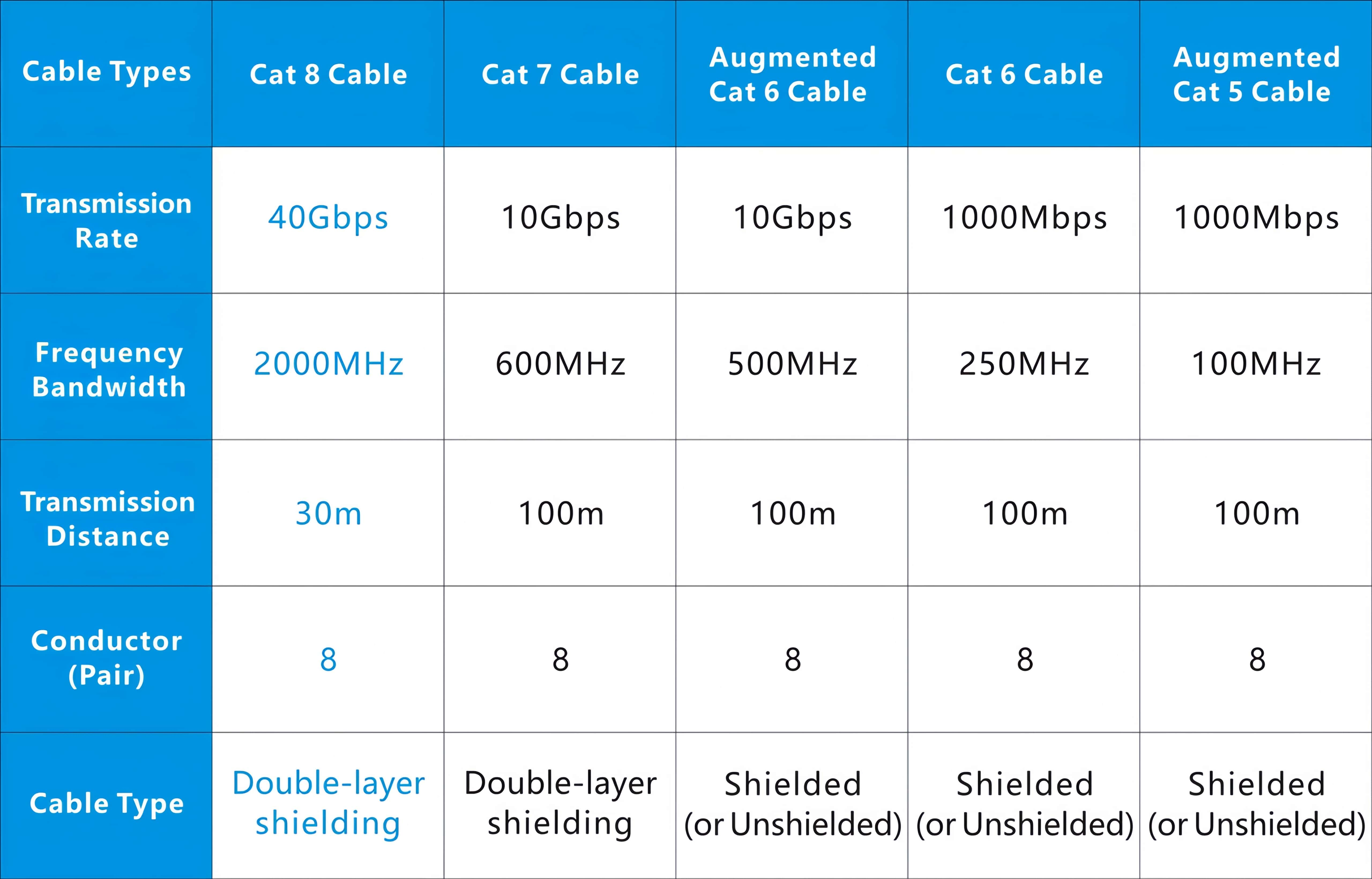
What does Cat7 mean?
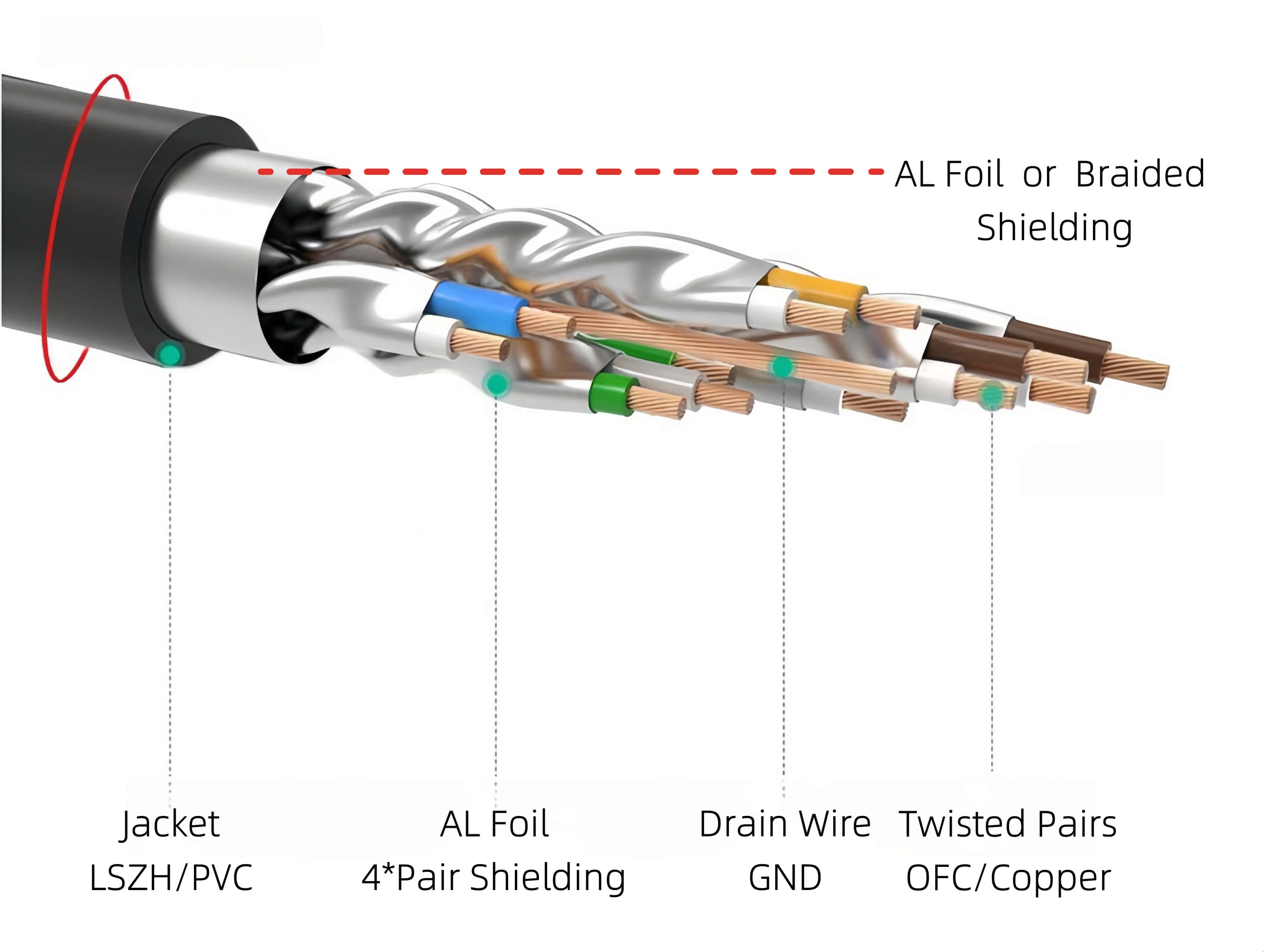
Cat7 (Category 7) is a fully shielded Ethernet cable designed for 10 Gbps speeds over 100 meters with a bandwidth of 600 MHz. It uses Screened Shielded Twisted Pair (SSTP) or Shielded Foiled Twisted Pair (SFTP) shielding, where each pair is individually wrapped in foil and an overall braided shield is added.
How is Cat7 cable physically different?
-Shielding: Unlike Cat5/Cat6 (which use unshielded or partially shielded designs), Cat7 employs dual-layer shielding (individual pair shielding + overall braid shield) to minimize electromagnetic interference.
- Connectors: Requires GG45 or TERA connectors for full performance, though it remains backward-compatible with RJ45.
- Cable Thickness: Thicker and less flexible due to shielding layers, making installation in tight spaces challenging.
What are the advantages of Cat7?
Higher Bandwidth: 600 MHz supports future 10G+ applications- Reduced Interference: Dual shielding eliminates crosstalk and external noise
- Longer 10G Range: Maintains 10 Gbps up to 100m, unlike Cat6 (limited to 55m)
- Future-Proofing: Ideal for smart homes, industrial setups, and high-density networks
Has Cat7 been ratified?
Cat7 is standardized under ISO/IEC 11801 but not recognized by TIA/EIA, limiting its adoption in North America. Cat7a (1000 MHz) is even less standardized and rarely used outside niche applications.How fast is Cat7?
- Cat7: Supports 10 Gbps at 600 MHz over 100m- Cat7a: An enhanced version with 1000 MHz bandwidth, theoretically supporting 40 Gbps over shorter distances (50m) but not widely ratified.
Cat7 vs Cat6
Cat7 has stricter specs for crosstalk (interference between conductors) and to achieve this it is required to be fully shielded by default. Such shielding was optional in Cat6 cables. Cat7 also allows the use of TERA style termination hardware - a robust, shielded plug typically used in datacenters and enterprise networking.Cat7 vs Cat7a
Cat7a was an update proposed in 2010 to the Cat7 spec that increased the maximum bandwidth to 40Gbps and the maximum transmission rate to 1GHz. Like Cat7, the category has been ratified by ISO/IEC but not by TIA.Cat7 vs Cat8
Category 8 or Cat8 cable has a maximum bandwidth of 25-40Gbps, with a maximum transmission rate of 2GHz. Cat8's full speed is only available over distances of 16-100' (5-30m), as it is intended to replace fiber for short connections in datacenters and other infrastructure.- Home/Office: Cat6a (balanced cost and performance).
- Future-Proofing: Cat7 for 10G over 100m.
- Enterprise/Data Centers: Cat8 for ultra-high-speed short runs .
Comment