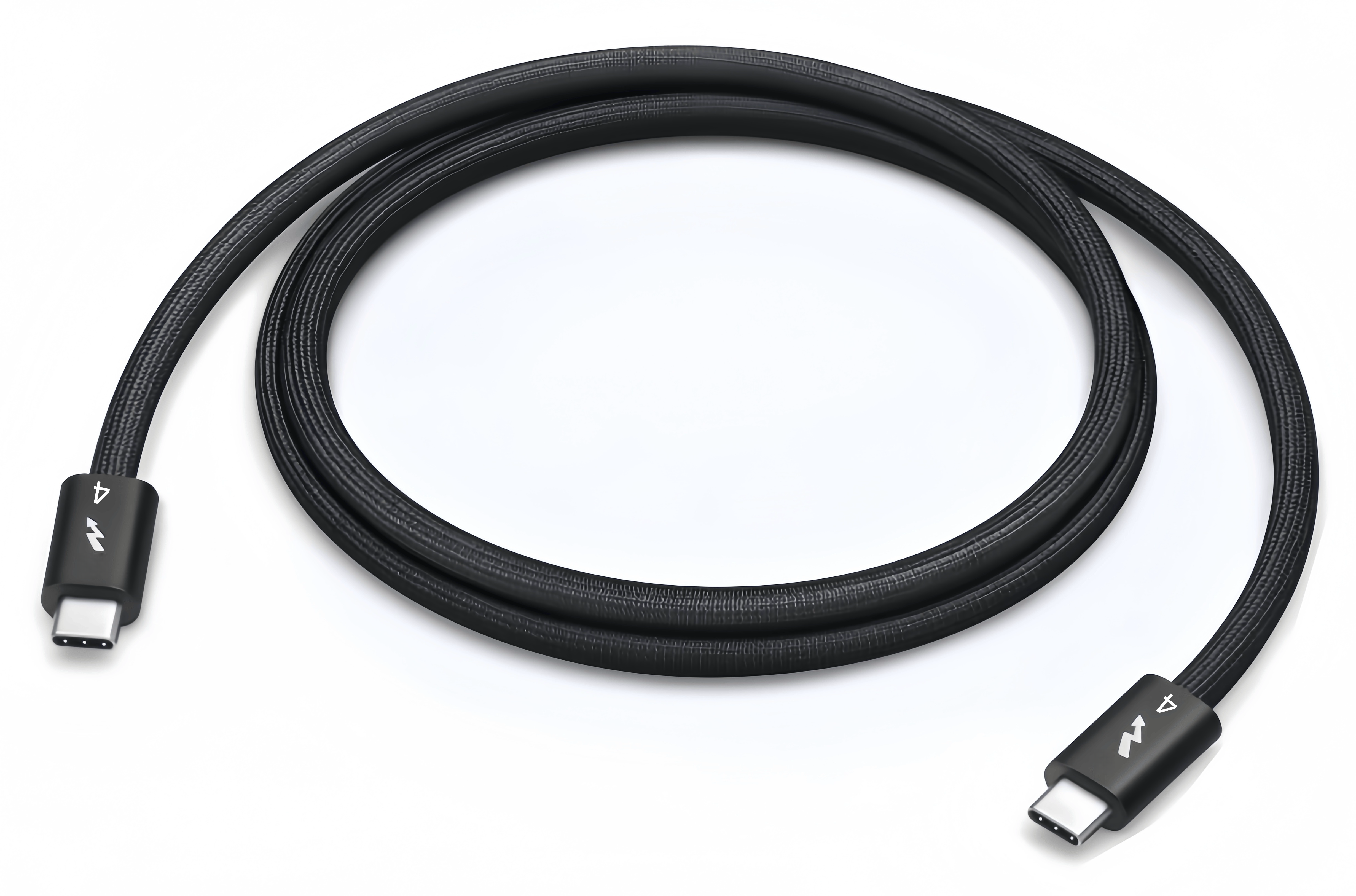
Thunderbolt 4 Type-C USB4 Cables
Feb 19,2025 | PINOWELL
What is USB4?
USB4 is the latest USB standard developed by the USB Implementers Forum (USB-IF), combining the best of USB 3.2 and Thunderbolt 3 technologies. It uses **USB Type-C connectors exclusively and supports dual-channel data transmission, enabling speeds up to 40 Gbps. Key innovations include dynamic bandwidth allocation, protocol tunneling (for DisplayPort, PCIe, and USB3 traffic), and mandatory USB Power Delivery (PD) support.
How Fast is USB4?
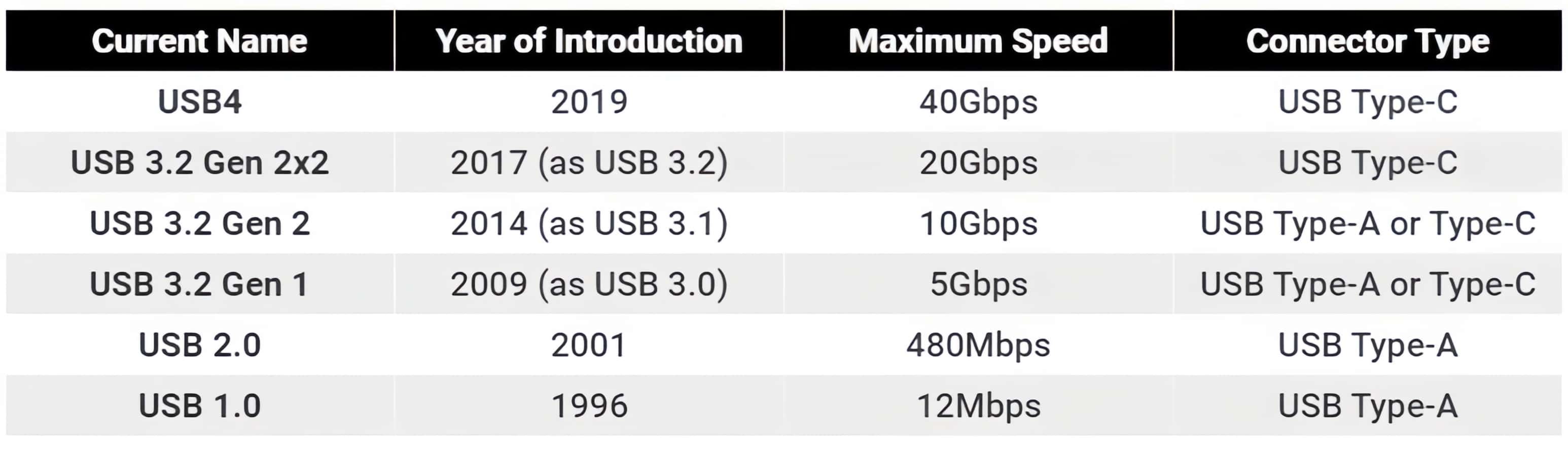
- Maximum speed: 40 Gbps (USB4 Gen 3×2 mode), achieved via dual-lane, full-duplex transmission
- Minimum speed: 20 Gbps (USB4 Gen 2×2 mode), double USB 3.2 Gen 2×2’s 10 Gbps per lane
- Bandwidth is dynamically shared between data, video (e.g., 8K @ 60Hz), and power delivery
Does USB4 Really Not Have a Space in It?
Yes. The official branding is “USB4” (no space), a deliberate choice to simplify marketing and avoid version-number confusion (e.g., USB4.0, 4.1). This reflects a shift toward emphasizing capabilities over iterations.
Release Timeline
- Specification released: August 2019 .
- Device availability: First USB4-compatible laptops and accessories began appearing in 2021–2022, with broader adoption by 2023–2024
Minimum Supported Features of a USB4 Port
- Connector: USB Type-C (mandatory)
- Speed: At least 20 Gbps (Gen 2×2)
- Tunneling protocols: USB3 and DisplayPort support (PCIe tunneling is optional)
- Power delivery: USB PD 3.0 (up to 100W) or PD 3.1 (up to 240W)
USB4 Fabric
USB4’s architecture includes a layered structure:
- Protocol Adapter Layer: Encapsulates USB3, PCIe, and DisplayPort into tunneled packets
- Transport Layer: Manages packet routing and bandwidth allocation
- Logical/Electrical Layers: Handle signal encoding and power management
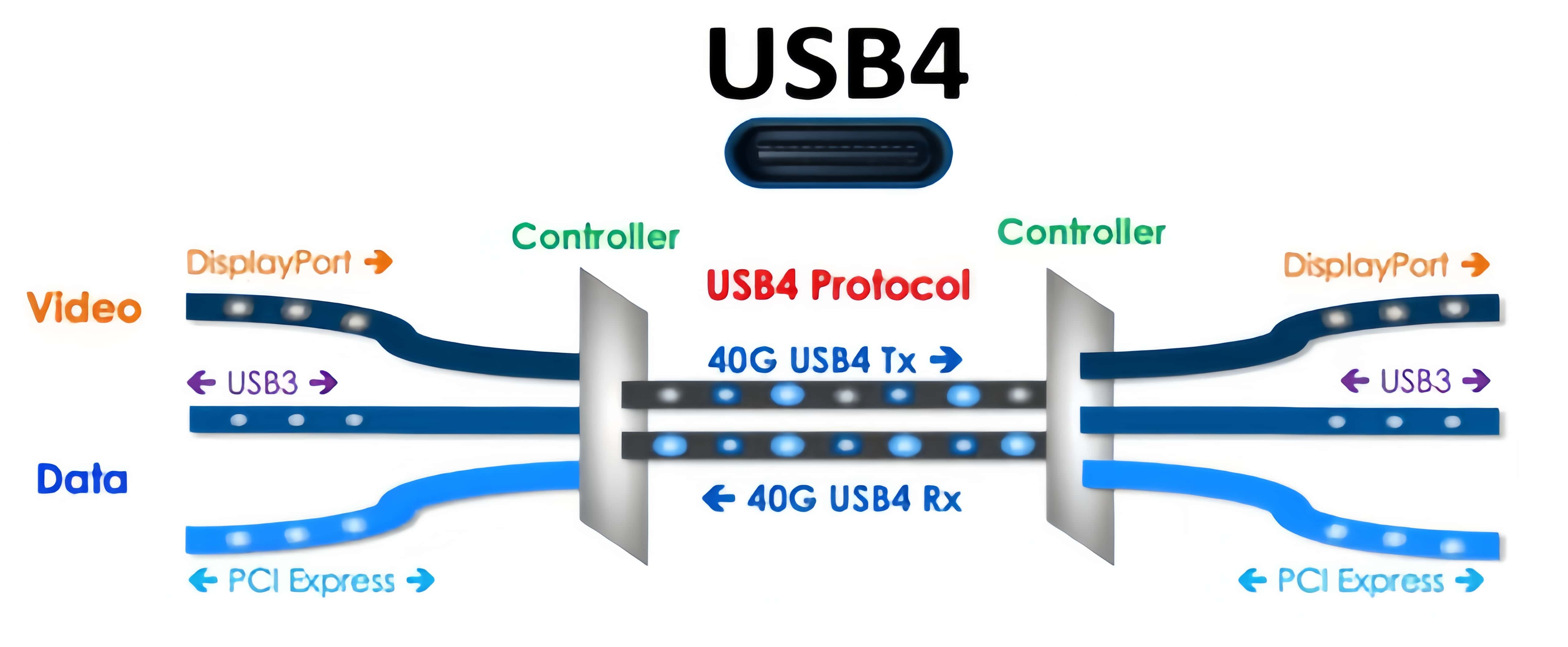
Alt Mode vs. Tunneling
- Alt Mode: Dedicates bandwidth to a single protocol (e.g., DisplayPort Alt Mode for video)
- Tunneling: Dynamically shares bandwidth across multiple protocols (e.g., USB3 + PCIe + video)
Thunderbolt Compatibility
- Non-active Thunderbolt cables: May work with USB4 devices if they meet USB4 specifications, but Thunderbolt 3 certification is optional for USB4. Full functionality (e.g., 40 Gbps) requires active cables or certified Thunderbolt accessories.
USB-PD Power Support
USB4 mandates **USB Power Delivery (PD), supporting up to 100W (PD 3.0) or 240W (PD 3.1) for charging high-power devices like laptops.
Backward Compatibility
Yes. USB4 works with:
- USB 2.0/3.2: Speed limited to the older standard’s capability
- Thunderbolt 3: Optional but common in premium devices
Connector Type
USB Type-C only. Legacy connectors (Type-A, Micro-B) lack the bandwidth for USB4.
Is USB4 Thunderbolt?
USB4 integrates Thunderbolt 3’s protocol but does not require Thunderbolt certification. Devices labeled “Thunderbolt 4” are USB4-compatible but add stricter performance guarantees.
DisplayPort Support
USB4 supports DisplayPort 1.4a (8K @ 60Hz) and DisplayPort 2.0 via tunneling or Alt Mode.
USB4 Specification
The USB4 Spec 1.0, released in August 2019, defines electrical, protocol, and architectural standards. It is freely available for implementation but requires certification for official branding.
Cable Length
- Passive cables: Up to 0.8 meters for 40 Gbps .
- Active cables: Up to 5 meters using signal boosters or optical fibers.
Comment